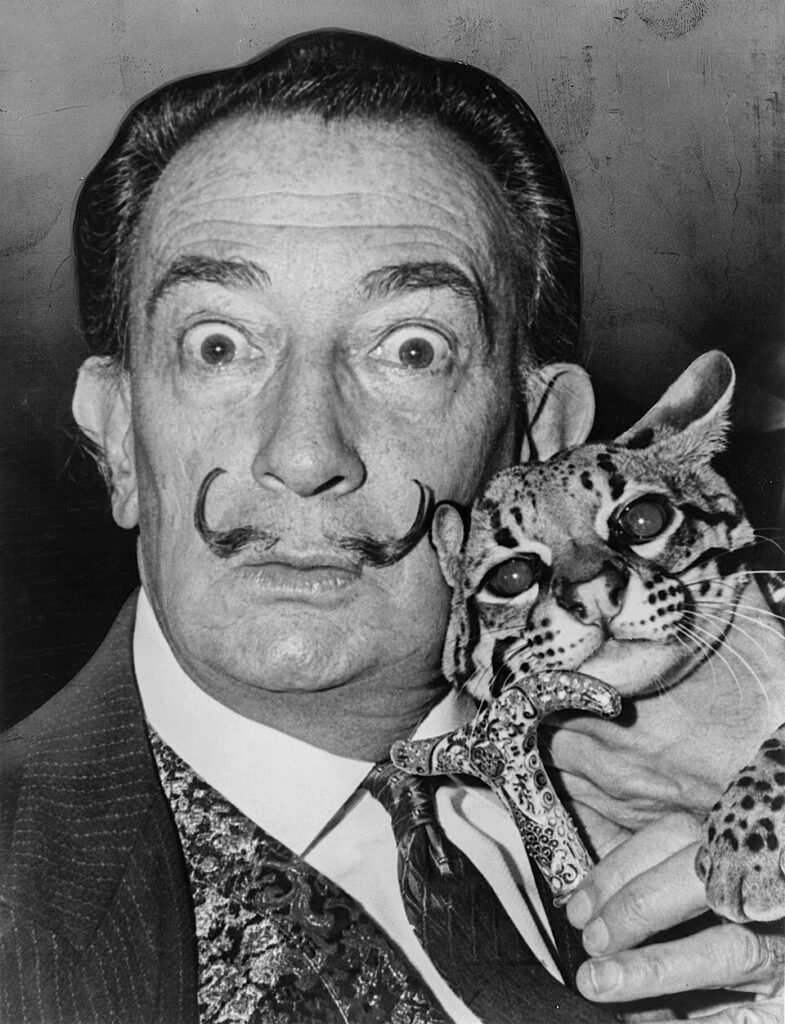
In this photo Salvador Dali is pictured with his pet ocelot, walking stick, and upturned mustache. My friend thought he might be attempting to look like a cat.
Salvador Dali is one of the most famous artists of all time. His technical expertise was combined with an embrace of the unusual. His paintings ranged from realistic to impressionistic, to cubism, to surrealism. Dali was also a sculptor. Over 1,300 of his paintings can be viewed on the internet.
Dali, a Taurus, was born on May 11, 1904. Interested in art at an early age, he attended drawing school at age twelve and had an exhibition at home.
Two events were particularly prominent in his childhood. Salvador was told he was the reincarnation of a dead brother also named Salvador. And his beloved mother died when he was sixteen.
At both art schools Dali attended, he dressed eccentrically and wore his hair long.
He was expelled from the second because he criticized the teachers. However, Salvador explored many forms of art while in attendance and dabbled in the avant-gard. (Kodner Gallery: Fine Art, “Salvador Dali”)
From 1926 to 1929 Dali delved further into the unusual. He met Picasso, Joan Miro, and Rene Magritte and was introduced to Surrealism. His paintings reflected their influence.
Dali was also an avid reader of Sigmund Freud’s psychoanalytic theories. (Freud was a Taurus too.) Salvador used his dreams and subconscious thoughts in his paintings.
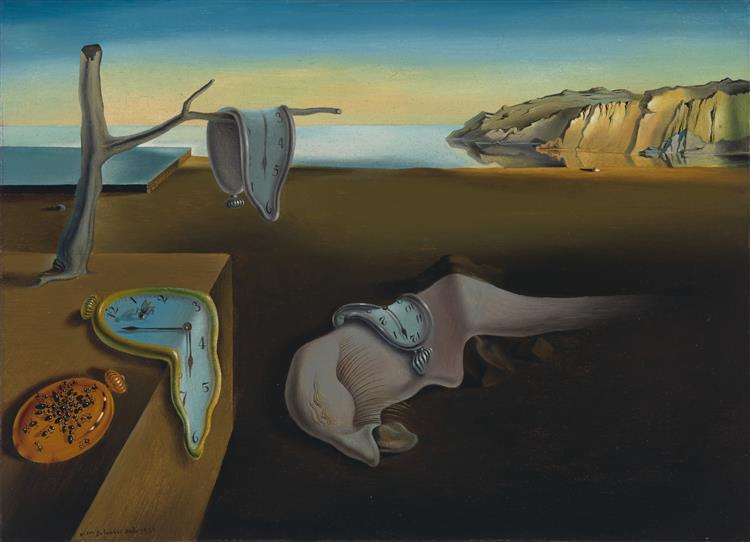
Salvador Dali produced perhaps his most famous painting in 1931—The Persistence of Memory. The painting conveyed the ideas that time was not rigid, and everything was destructible. (Ibid) The sign Taurus is associated with physical matter.
Dali married in 1929, and his wife tended to the business side of being an artist. She negotiated with dealers and exhibition promoters. (Ibid)
In the 1930s Salvador’s personality sometimes overshadowed his artwork. He wore a long cape, an exaggerated mustache, and carried a walking stick. At one exhibition Dali wore a glass case across his chest. It contained a brassiere. (Ibid)
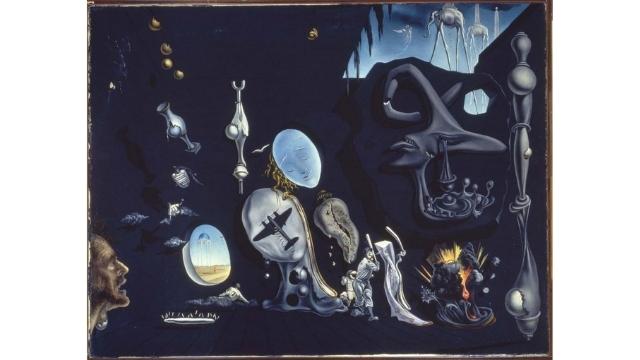
1945 saw the advent of Dali’s “Nuclear Mysticism” period. He was horrified by the use of the atomic bomb at Hiroshima. His first work—one of nineteen–was entitled Uranium and Atomica Melancholica Idyll. (Biography, “Salvador Dali,”)
Salvador spent most of his time creating the Dali Theater-Museum in Figueres from 1960 to 1974. It contains many of his works, some of them specially created for the site. Nearby is the house where he was born. (Ibid)
In 1980 Dali had to retire from painting because of trembling in his hands. He passed away in 1989. To reiterate, his paintings can be viewed at many websites. Dalipaintings.com is one of them.
Salvador Dali as an Idiosyncratic Personality
The Idiosyncratic style in the DSM is characterized by these six traits and behaviors. Dali showed them all.
- He was sustained and tuned into his own inner life and world of feelings and beliefs.
- Salvador was self-directed and independent. He needed few close relationships.
- Dali did his own thing. He ignored convention and created an unusual, interesting, and eccentric lifestyle.
- Salvador was open to anything. He had an expanded view of reality.
- Dali was drawn to abstract and speculative thinking. His study of psychoanalytic theory and surrealism were examples.
- Salvador Dali and others with his personality style are keen observers of others and sensitive to how others react to them. [All material about the Idiosyncratic Personality was taken from Personality Self-Portrait by John Oldham and Lois Morris, 1991, p. 242-243)]
Salvador Dali’s Horoscope and Analysis
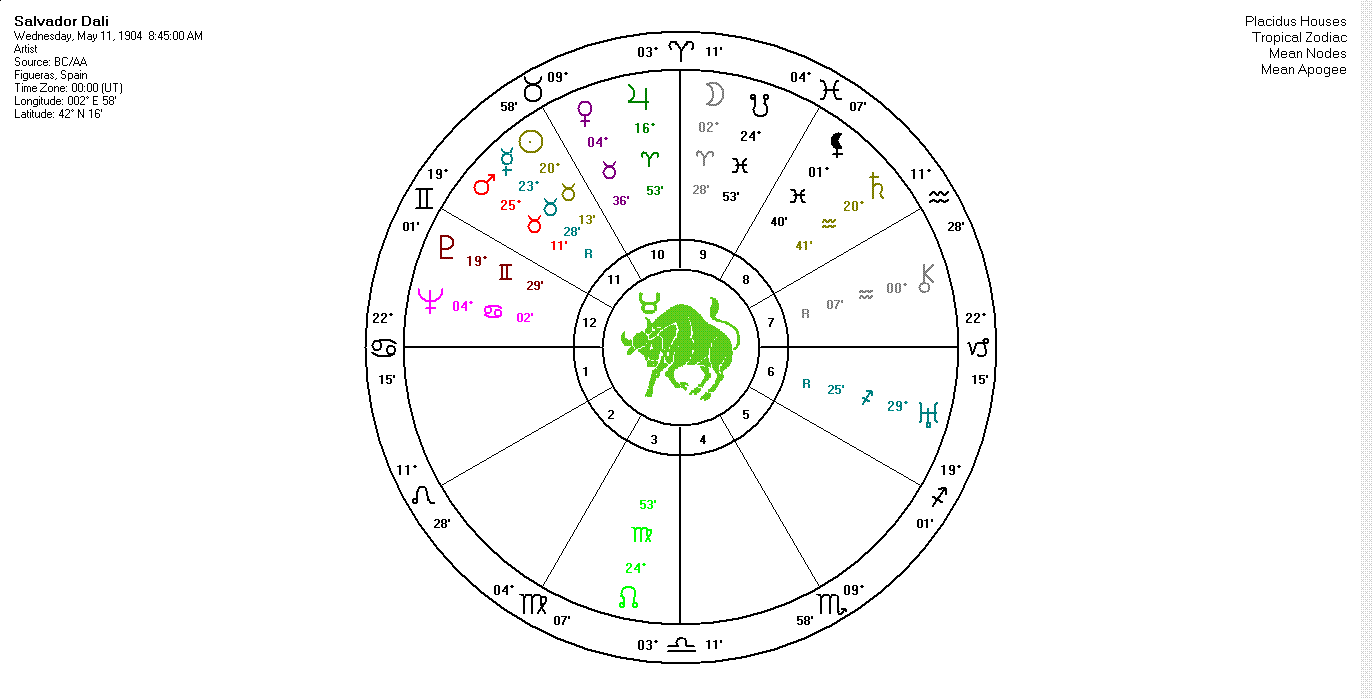
Dali had a stellium in Taurus. [Sun, Mercury, Mars, and Venus] Taureans often have an artistic leaning. His Venus was sextile Neptune. This indicates his early potential as an artist. His Sun/Mars conjoining made him a hard worker and in the forefront of different artistic styles.
Salvador’s Mercury was conjoined with Mars. This gave his work a satirical element. (Parker, The Compleat Astrologer, p. 140)
Venus, the Sun’s ruler, was square Chiron. Dali probably used his creativity to heal emotional wounds. He was able to channel those wounds into sources of inspiration. (Astromatrix, “Venus Square Chiron”)
Salvador’s Moon was in Aries. This position gives a dislike of conventional behavior. (Parker, p. 88)
Dali had a Cancer Ascendant. Cancer has an arty side. Dali had Neptune in the 12th House. This is good for creative work. (102)
Uranus in the 6th House made Salvador’s actions in his exhibits and work unpredictable and shocking.