
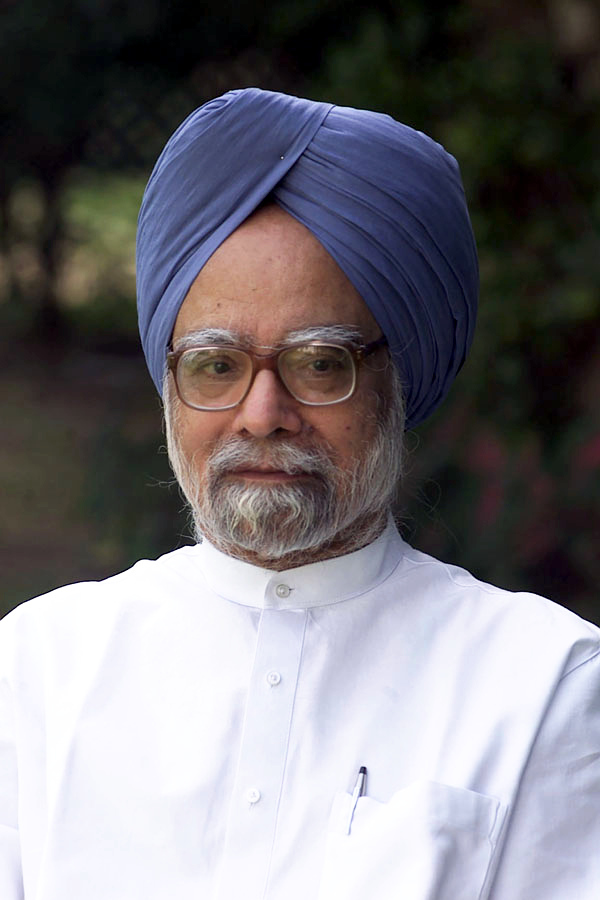
Manmohan Singh was born in Gua, British India. Today it is a Punjabi province in Pakistan. Singh was reared by his grandmother because his mother died when he was very young. His family were dried fruit traders. (Wikipedia, “Manmohan Singh”)
India has the world’s fourth largest economy by GDP. It contains elements of both socialism and capitalism. The government owns the railroads and highways. It largely controls farming, fertilizers, chemicals, banking, insurance, airports, utilities, ports and shipping, telecommunications, and supercomputing. (Wikipedia, “Economy of India”)
The 2025 GDP is estimated at $4.13 trillion. 70% of that is driven by the purchases of its own consumers. India is the world’s most populous country. 1,428,627,663 people live there. (Ibid)
Percent of GDP by Sector: Finance, Real Estate, Professional Services 22.9%, Trade, Hotels, Transportation, Communication, Broadcasting 18.3%, Manufacturing 17%, Agriculture, Forestry, Fishing 14.3%, Public Administration, Defense 12.5%, Construction 8.89%, Utility Services 2.32%, Mining 2.02% (Ibid)
Biography
Manmohan Singh (September 26, 1932) was a peace-loving Libra like Mahatma Gandhi. Born to a poor family he was the first Sikh prime minister. (BBC: “Remembering the kind leader who led India with a steely resolve,” Zoya Mateen, December 27, 2024)
Singh had a doctorate in economics from Oxford. During his tenure as Finance Minister from 1991 to 1996, he implemented reforms which moved India away from protectionism to becoming a part of the global economy. His policies removed millions from the blight of poverty. He balanced growth with economic help for the disadvantaged. (The Invisible Narod, “Manmohan Singh: The Visionary Economist and India’s Silent Leader” by Pankag Jupta, December 27, 2024)
Manmohan was an introvert known for his honesty. He deregulated industries, removed bureaucratic hurdles, promoted direct foreign investment, reformed taxation, and created a more market-oriented approach. India is now a hub for manufacturing, services, and IT. (Ibid)
Growth frequently exceeded 8% during his first term as prime minister. He guaranteed 100 days of employment with wages to every rural household. Singh improved healthcare structure in rural areas. Every citizen became able to access information from public authorities. (Ibid)
Manmohan’s second term as prime minister was not as successful as his first. The government was rocked by several scandals. One involved favoritism in the telecom industry. Another concerned the expenditures on the Commonwealth Games and the corruption of the officials overseeing them.
Horoscope
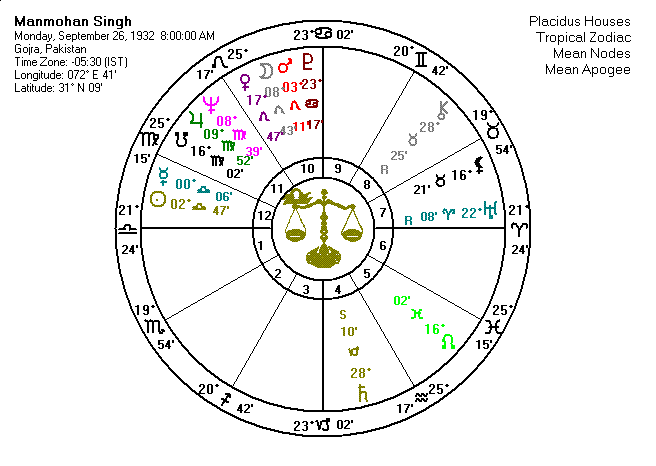
Singh used a data driven approach in his decision making. In his horoscope this could be accounted for by the position of Jupiter in detail and technically oriented Virgo. Also, the Sun and Mercury are together at the beginning of Libra, and both trine Saturn. Manmohan had organizational ability, thought in depth, was honest, and liked structure.
A key to the nativity was the T-square involving Uranus in Aries. In Aries Uranus provided Singh with leadership ability. Manmohan was willing to take risks. A T-square is an aspect pattern that causes tension. It compelled him to act.
Singh had a stellium in Leo. Leo likes to be the boss and organize things. As the time of birth is not known, either Mars or Venus was in conjunction with the Moon. The former would have provided courage and drive. The latter would have made his emotions calm and tranquil. An argument can be made for either.
Going from the particular to the general, we note 5/10 planets are in Cardinal Signs. Manmohan was enterprising and wanted to get things done.
Dave Lemire, my friend, used the SELF model to read people. Singh may have been a quintessential LF. He used Facts and data to order his world, was Loyal, and liked to fit in. Because of his intelligence, drive, and likability he was able to move up the political ranks and transform India.